Launch offer — valid today only

📄 Digital book in PDF · read it on your phone or print it

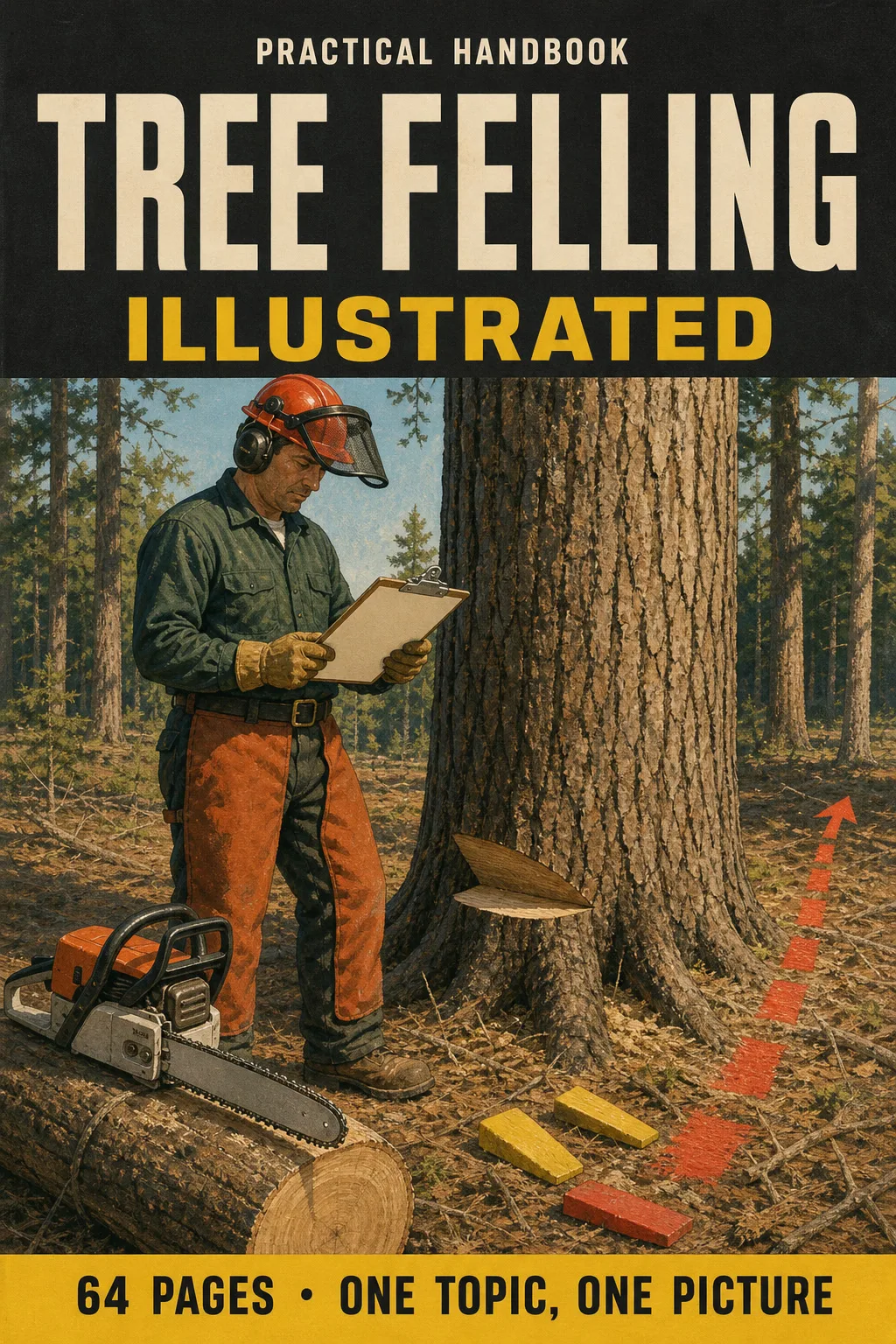
Chainsaw Tree Felling, From Size-Up to Back Cut, in Drawings 8 Steps, the Same Order on Every Tree

Size-up, lean and crown weight, the drop zone, two escape routes, the notch, the hinge, the back cut, wedges and bucking. Each topic gets its own page: the drawing first, then what you need to remember. 64 illustrated pages.

I WANT TO SEE EVERY CUT DRAWN

🔒 Secure checkout · PDF by email · 30-day guarantee

Every topic, its own pageEvery cut drawn from above and from the side, with the explanation right next to it
64 illustrated pages9 parts, from the felling sequence to the printable field checklist
Up-to-date sourcesOSHA 29 CFR 1910.266, ANSI Z133 and USDA Forest Service sawyer training material
PDF by emailFormat

Look Inside the Book

Every page has one big labeled drawing and a box with the measurements and steps you need to know:

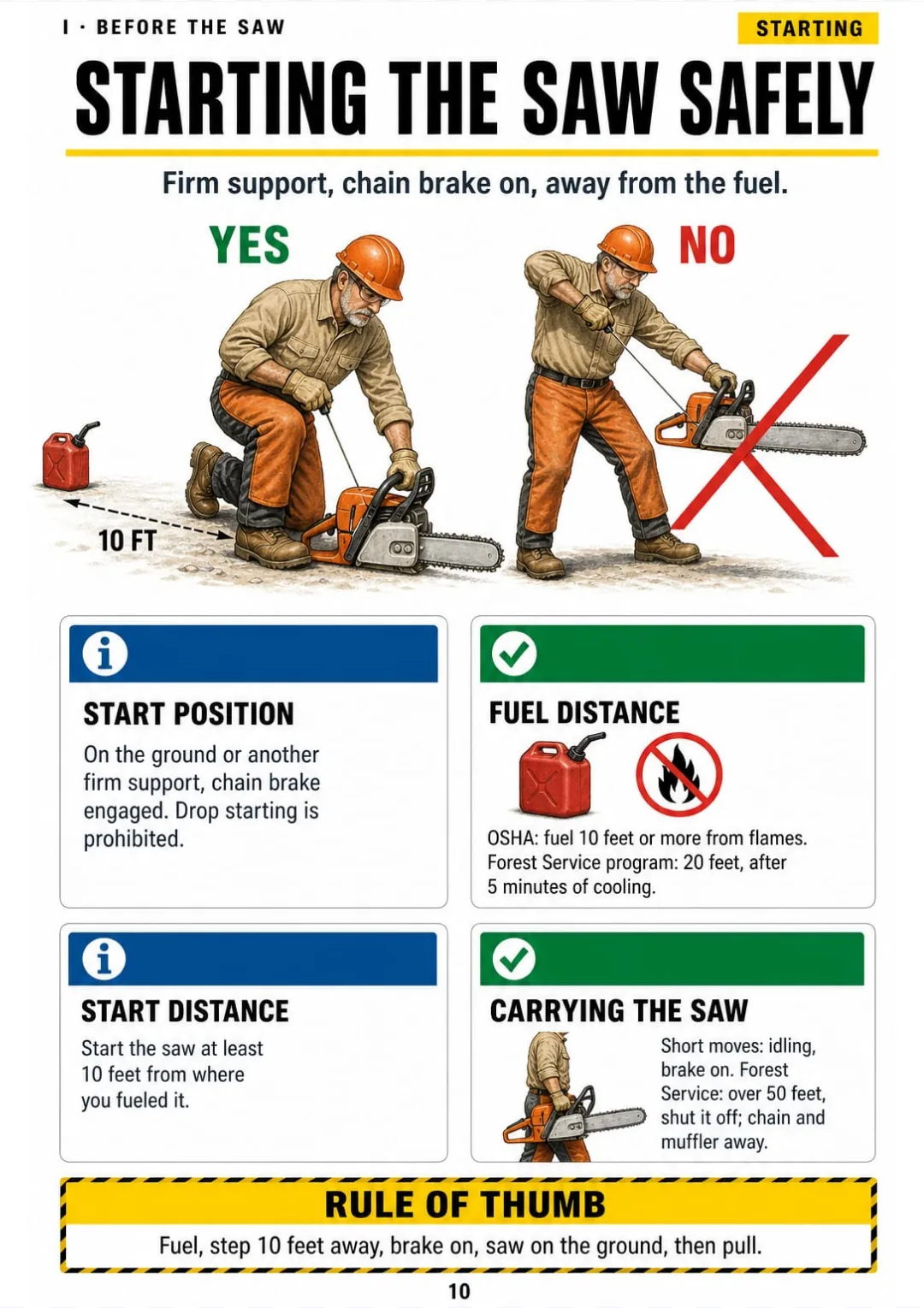
Never drop-start: firm support, chain brake on, 10 ft from the fueling area.
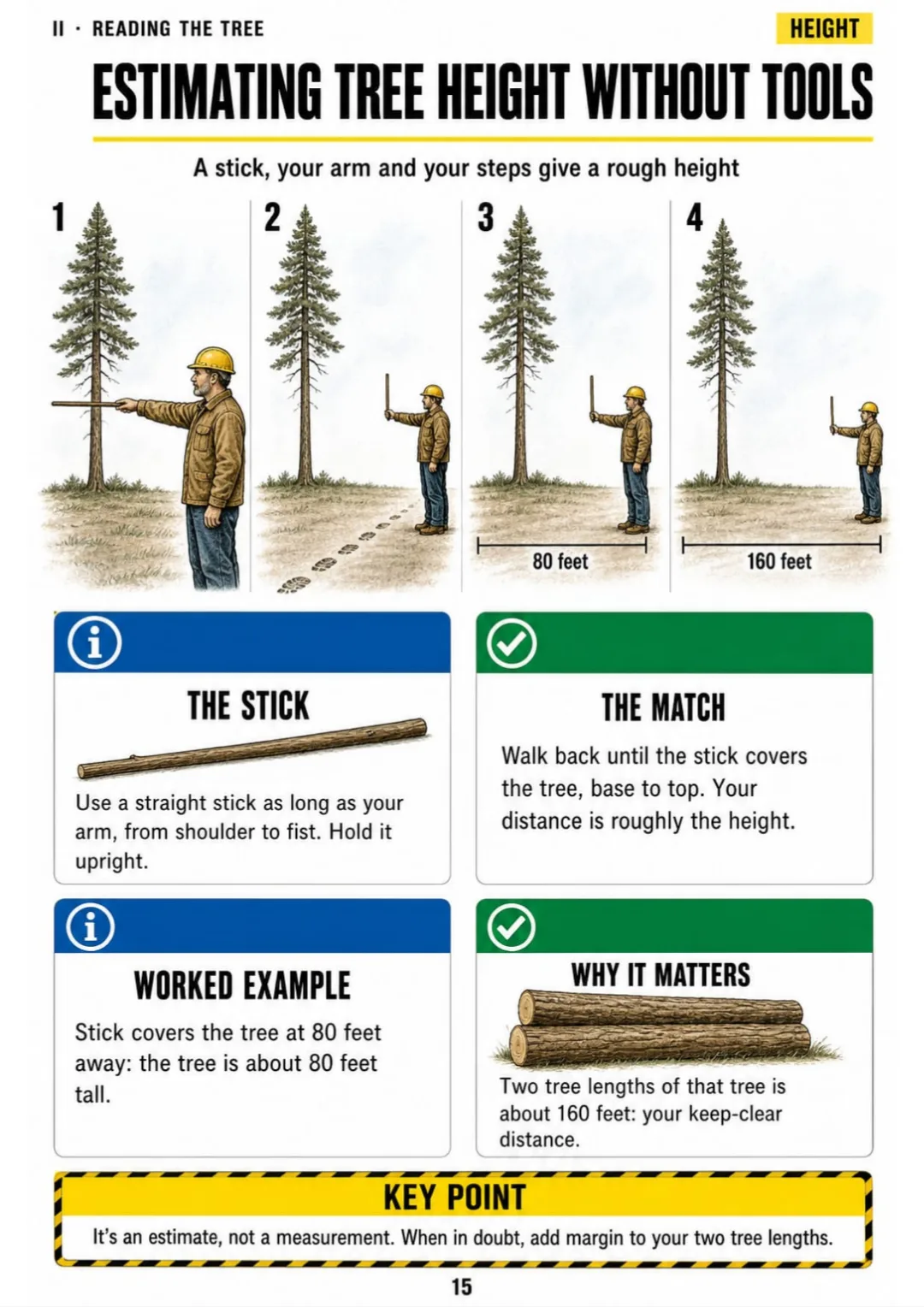
Stick method: 80 feet back when the stick covers it = about 80 feet tall.
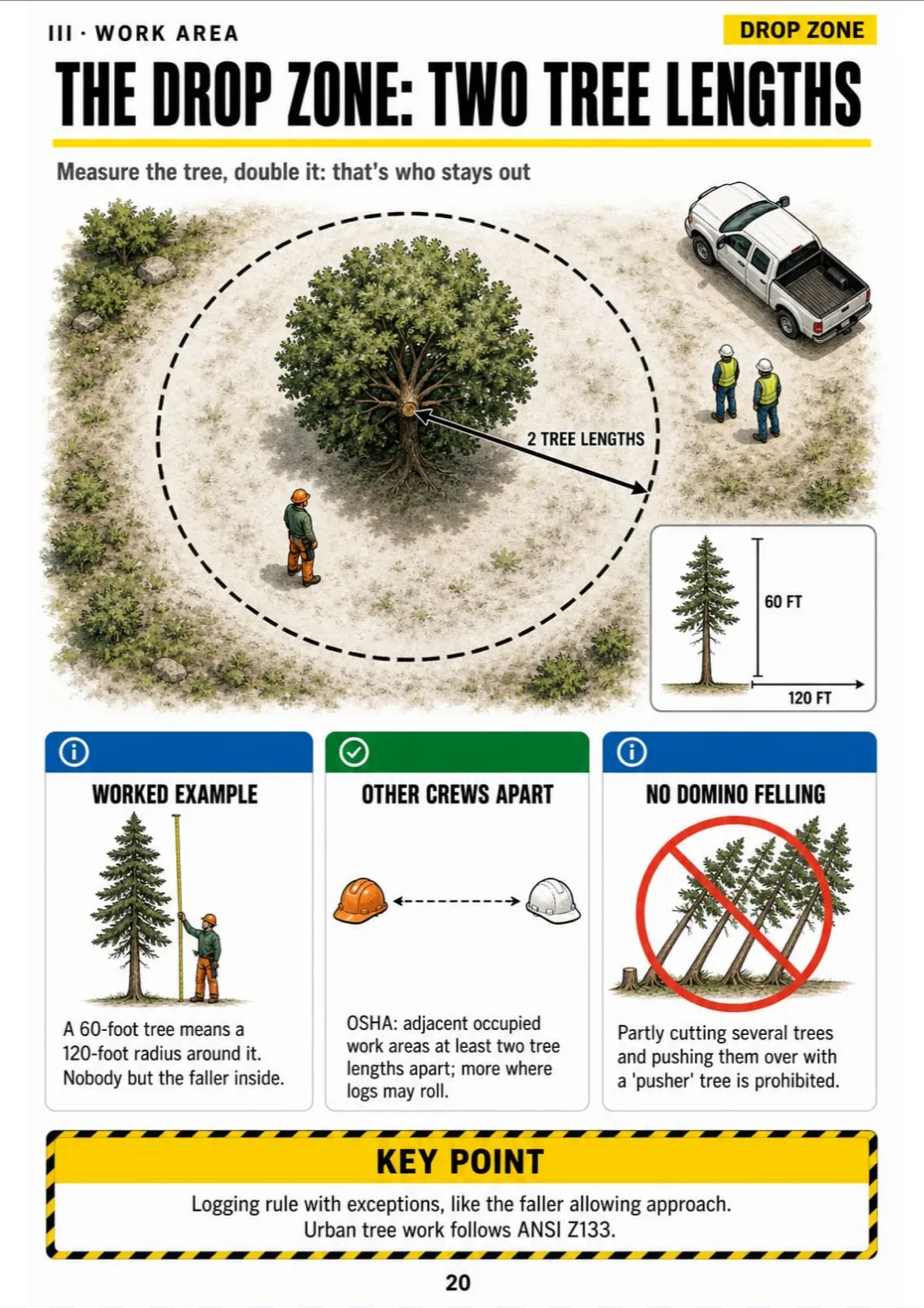
60-foot tree = 120-foot radius drop zone · OSHA 29 CFR 1910.266
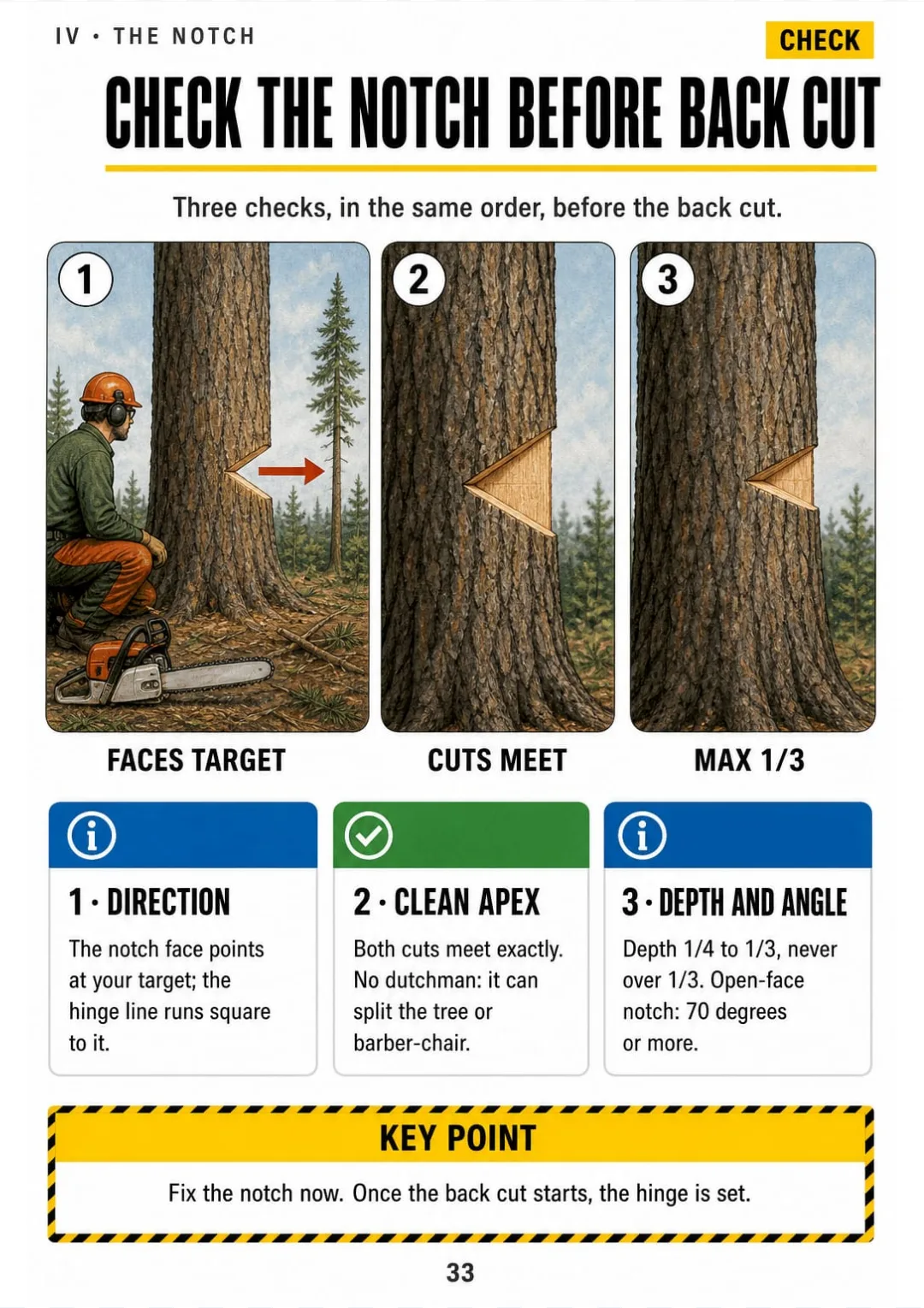
Before the back cut: notch faces the target, cuts meet cleanly, depth no more than 1/3.
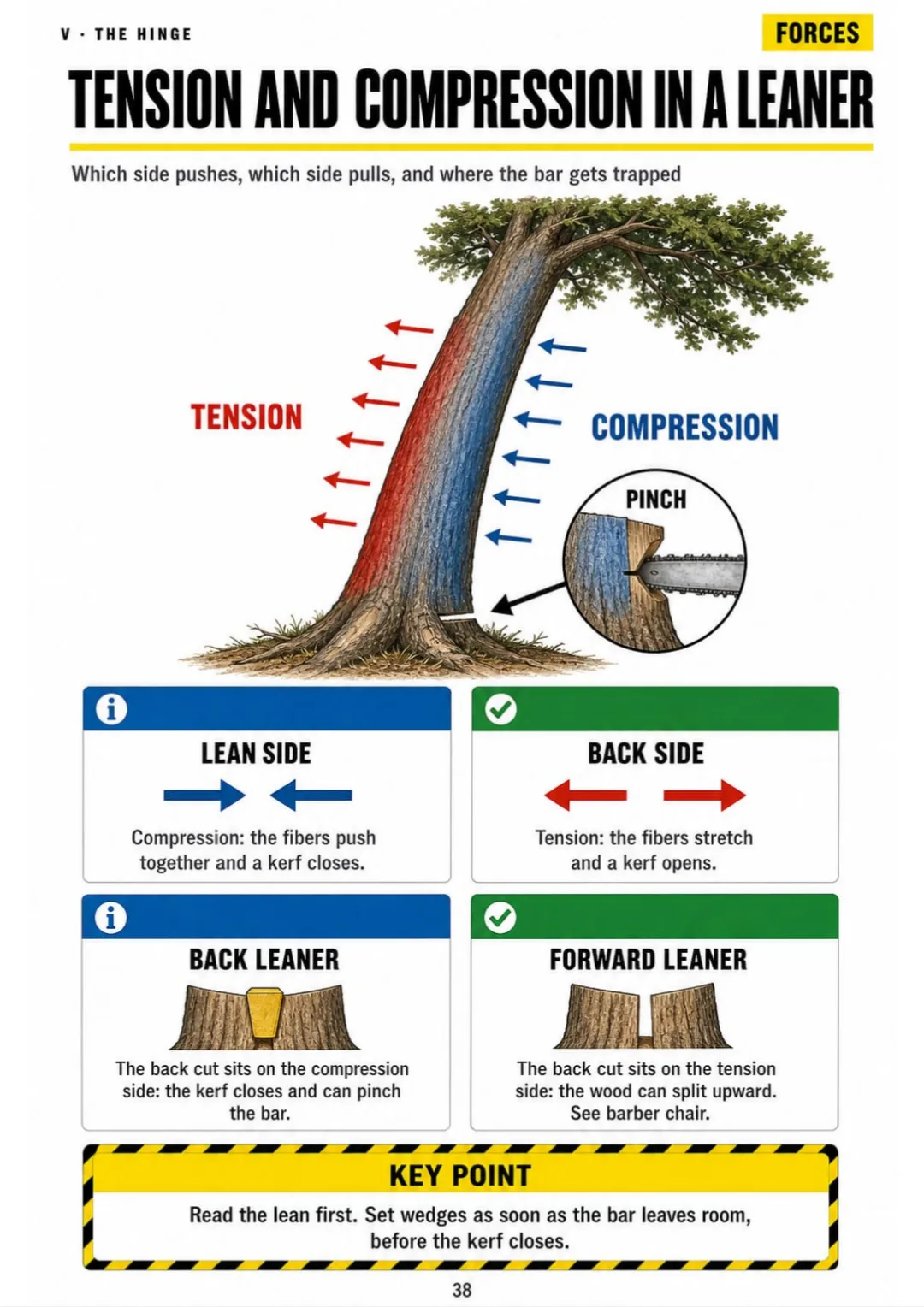
Lean side = compression (kerf closes) · back side = tension (kerf opens).
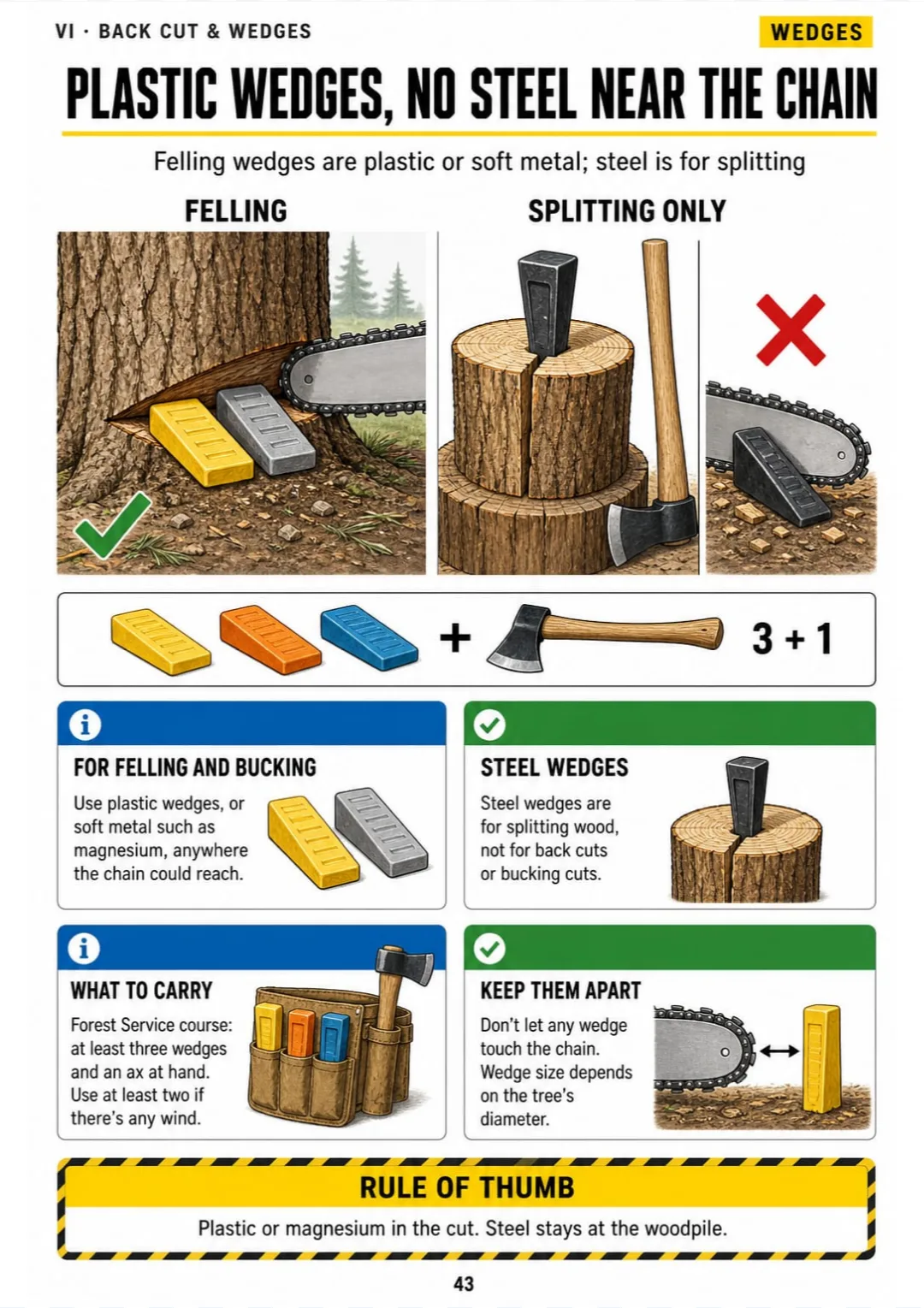
Plastic or magnesium wedges for felling · 3 wedges + an ax · 2 wedges in wind
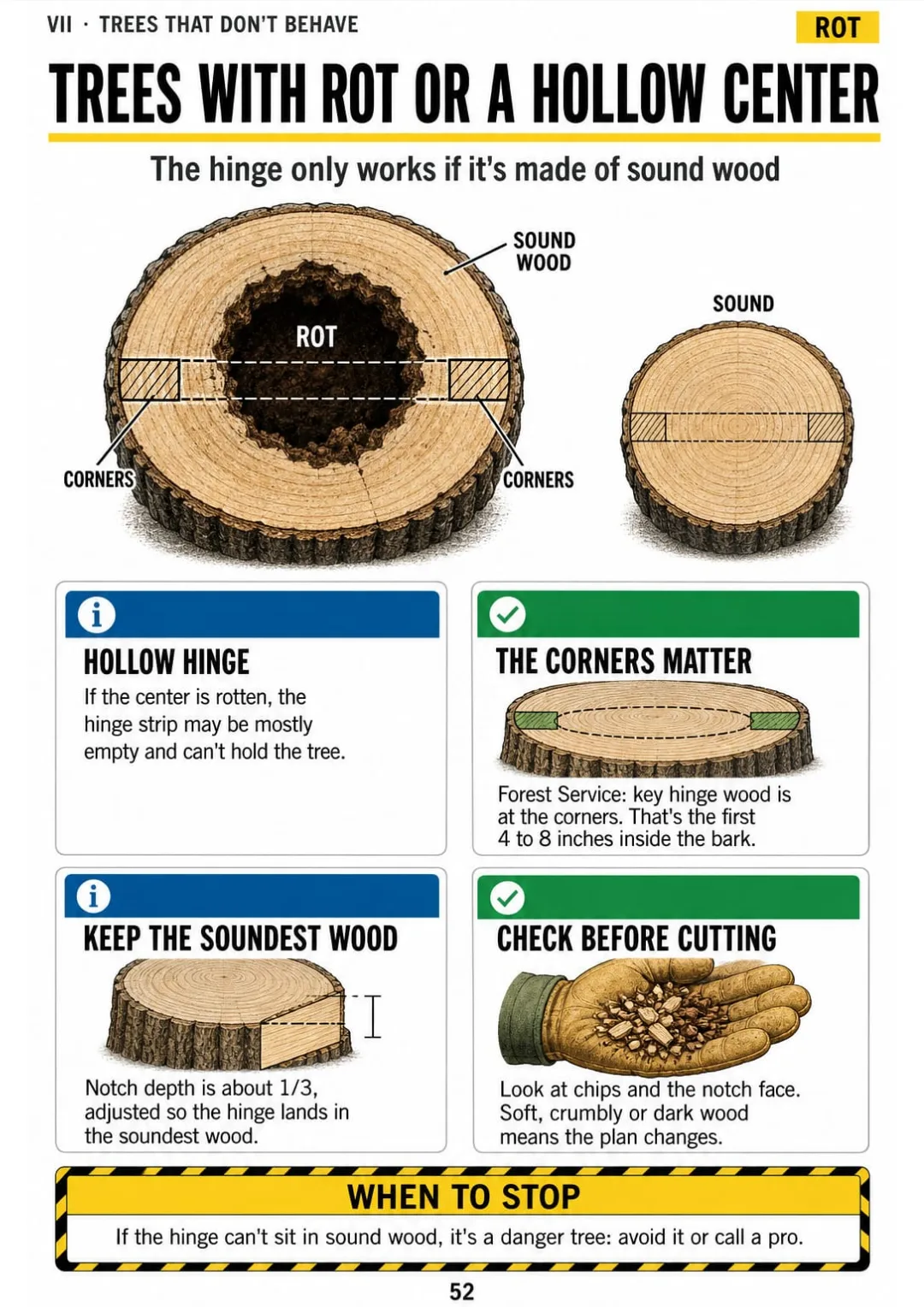
Rot and hollow trunks: hinge in sound wood, corners 4 to 8 inches inside the bark.
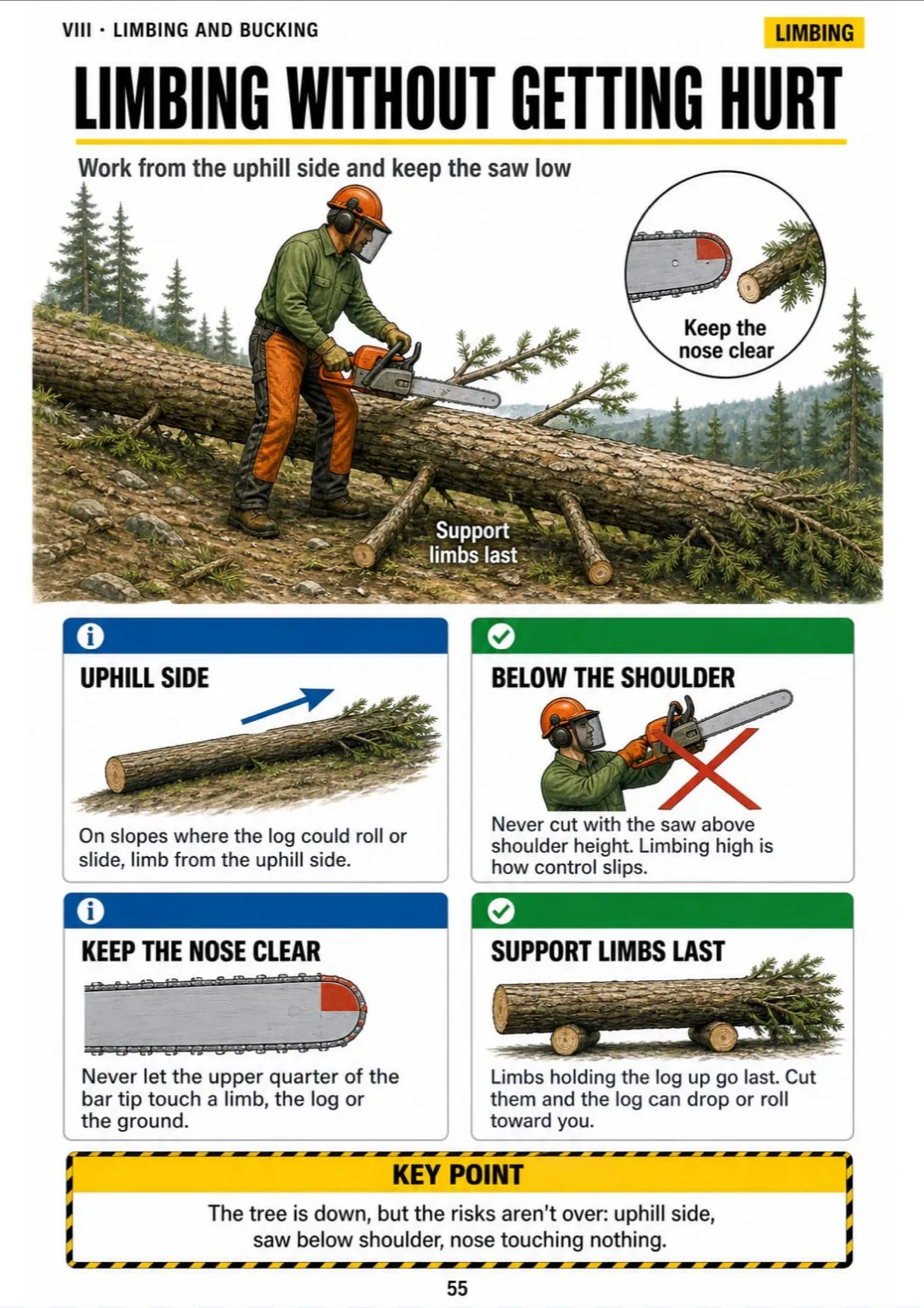
Limbing: stand uphill where the log could roll (OSHA 1910.266) and keep the saw below shoulder height.

Swipe to see more →

These are real pages from the book. The table of contents is the full one: 9 parts and 60 topics.

The Problem Isn't You. It's How It Was Explained to You.

You're standing at the base of a 60-foot oak with the saw on the tailgate, and your buddy is stacking wood forty feet away, right where the top could land.

You've heard the drop zone is "two tree lengths." But the manual buries it in a paragraph about felling areas and "adequate distance," and nobody ever drew you the circle.

60-foot tree = 120-foot radius drop zone · OSHA 29 CFR 1910.266

In the book it's one page: the tree seen from above, a circle twice its height around it, 60-foot tree, 120-foot radius, and everyone standing outside the line.

The rest works the same way: escape routes at about 45 degrees, the notch, the hinge, the back cut, the bore cut on a forward leaner. Each one has its own page.

You look up at the tree, walk the circle and clear the drop zone before the saw starts, without going back to the manual.

COMPARE FOR YOURSELF

Same Topic, Two Ways to Learn It

THIS
  • The manual: line after line
  • Size-up and cuts explained only in words
  • You walk up to the tree still unsure
Prior to the initiation of any felling operation, the sawyer shall conduct a thorough evaluation of the tree and its surroundings. This evaluation should include, but is not limited to, an estimation of total tree height, a determination of the degree and direction of lean, an assessment of crown weight distribution, the identification of dead or detached limbs and other overhead hazards, and consideration of prevailing wind conditions, all of which may influence the behavior of the fall and must be weighed collectively.
FOR THIS
  • The size-up in one drawing
  • The 5 checks in a box
  • You see it and you get it
Stick method: 80 feet back when the stick covers it = about 80 feet tall.
CONTENTS

Take a Look at the 9 Parts and 60 Topics

Before the saw starts, reading the tree, clearing the work area, the notch, the hinge, the back cut and wedges, trees that don't behave, limbing and bucking, and a review with a field checklist: 64 pages, all illustrated.

IBefore the Saw Starts · pp. 5-11
  1. The Felling Sequence on One Page
  2. Your Protective Gear, Head to Boots
  3. How Chaps Actually Stop a Chain
  4. The Saw Check Before Every Felling
  5. Kickback: The Upper Quarter of the Bar Tip
  6. Starting the Saw Safely
  7. Pull Chain vs Push Chain
IIReading the Tree · pp. 12-19
  1. Size-Up Always in the Same Order
  2. Measuring Lean with a Plumb Line
  3. Crown Weight: Where the Branches Pull
  4. Estimating Tree Height Without Tools
  5. Widowmakers and Overhead Hazards
  6. Defects in the Trunk
  7. Wind and the Fall
  8. Choosing the Lay: Where It Should Land
IIIClearing the Work Area · pp. 20-25
  1. The Drop Zone: Two Tree Lengths
  2. Clearing the Base of the Tree
  3. Two Escape Routes at About 45 Degrees
  4. Safety Zone: Where You Stand When It Falls
  5. Power Lines, Buildings and Roads
  6. Communication and Hand Signals
IVThe Notch · pp. 26-33
  1. What the Notch Does
  2. Notch Depth: Never More Than 1/3 of the Diameter
  3. The Open-Face Notch: 70 Degrees or More
  4. The Conventional Notch: 45 Degrees
  5. The Humboldt Notch
  6. Aiming the Notch with the Saw's Sight Line
  7. Matching the Two Cuts: No Bypass
  8. Checking the Notch Before Moving On
VThe Hinge · pp. 34-39
  1. The Hinge Is Your Steering Wheel
  2. Hinge Thickness: About 10% of the Diameter
  3. Hinge Width: About 80% of the Diameter
  4. Even Hinge vs Tapered Hinge
  5. Tension and Compression in a Leaning Tree
  6. Hinge Mistakes Drawn One by One
VIBack Cut and Wedges · pp. 40-47
  1. Where the Back Cut Goes
  2. Cut the Back Cut Toward the Hinge, Never Through It
  3. When to Set the First Wedge
  4. Plastic Wedges, Never Steel
  5. Driving Wedges to Lift the Tree
  6. Bore Cut and Holding Strap
  7. Walk Away: The First Seconds of the Fall
  8. The Stump Tells the Story
VIITrees That Don't Behave · pp. 48-54
  1. Barber Chair: Why Forward Leaners Split
  2. Back-Leaning Trees
  3. Side-Leaning Trees
  4. Small-Diameter Trees and Saplings
  5. Trees with Rot or a Hollow Center
  6. Hung-Up Trees: What Not to Do
  7. Spring Poles
VIIIAfter the Fall: Limbing and Bucking · pp. 55-59
  1. Limbing Without Getting Hurt
  2. Bucking: Reading Tension and Compression in a Log
  3. Two-Cut Bucking: First Cut, Second Cut
  4. Bucking on a Slope
  5. Pinched Bar: How to Free It Safely
IXReview and Field Checklist · pp. 60-64
  1. The Measurements Page
  2. Worked Example: One Tree, Start to Finish
  3. Frequent Mistakes Drawn Side by Side
  4. The Printable Felling Checklist
  5. When Not to Cut: Calling a Pro

One Page, One Topic, All Clear

Think of it this way:

It's Saturday morning, a storm-cracked hickory is leaning toward the shed, and you have to decide which way it goes and how much hinge to leave.

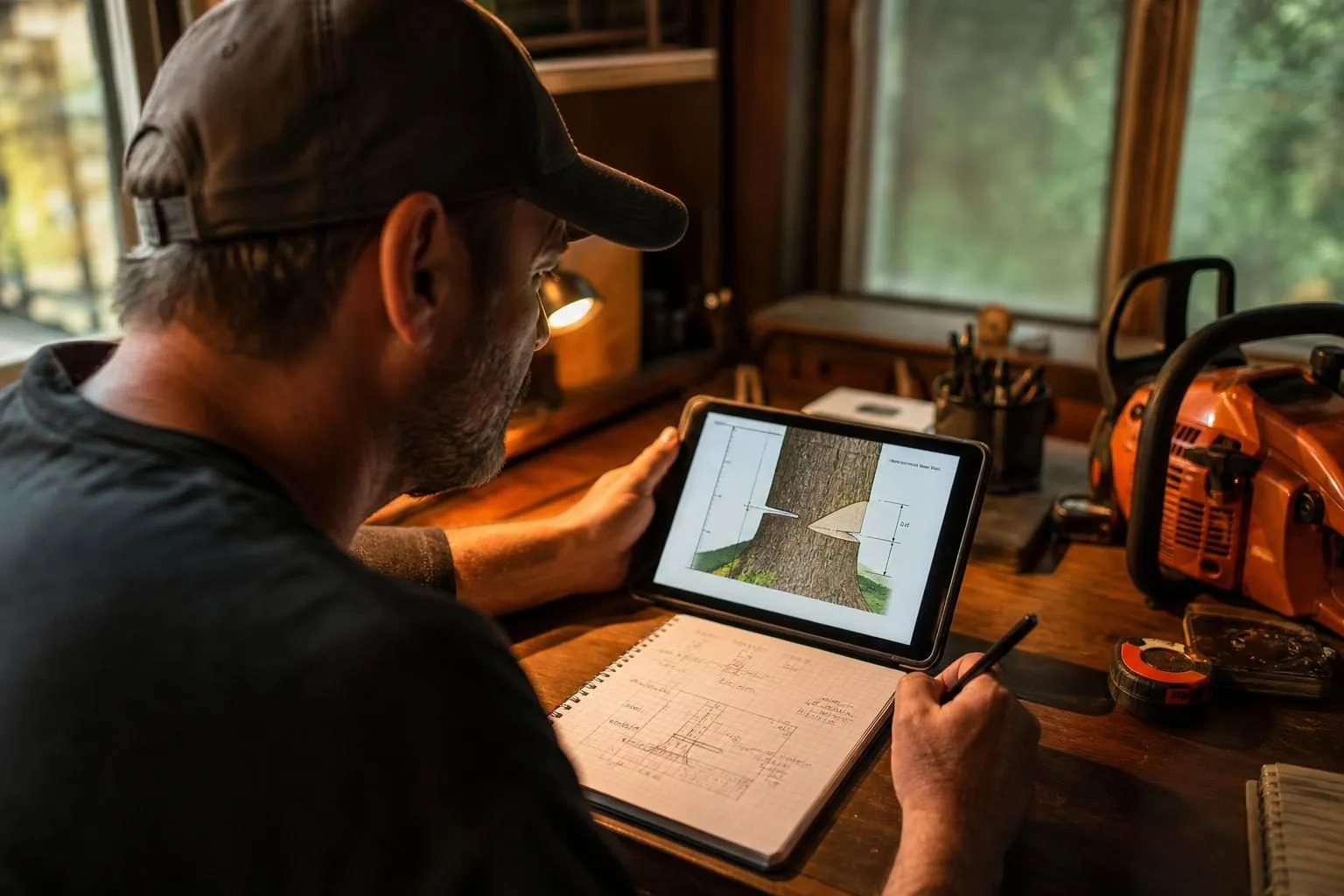
You open the hinge page and see the stump from above: the notch in front, the back cut behind, and the uncut strip in between, labeled, holding the tree and steering it.

Lean side = compression (kerf closes) · back side = tension (kerf opens).

Same with the drop zone, the two escape routes, the back-cut height, the barber chair and bucking under tension: each one on its own page.

Tree Felling Illustrated is 9 parts and 60 topics, all drawn, and it ends with a measurements page, a worked example and a printable felling checklist.

What you see drawn, you don't have to memorize.

What's Inside Tree Felling Illustrated:

Ipp. 5-11

Before the Saw Starts

The whole felling sequence on one page, your gear from head to boots, how chaps stop a chain, the saw check, kickback, starting the saw, and pull chain vs push chain.

IIpp. 12-19

Reading the Tree

Size-up in the same order every time, measuring lean with a plumb line, crown weight, estimating height, widowmakers, trunk defects, wind, and choosing where the tree should land.

IIIpp. 20-25

Clearing the Work Area

The drop zone at two tree lengths, clearing the base, two escape routes at about 45 degrees, where to stand during the fall, power lines and roads, and hand signals.

IVpp. 26-33

The Notch

What the notch does, notch depth, the open-face, conventional and Humboldt notches, aiming with the sight line, matching the cuts with no bypass, and the final check.

Vpp. 34-39

The Hinge

You see how much wood to leave and why: the hinge as your steering wheel, thickness and width as a share of the diameter, even vs tapered hinges, tension and compression, and every hinge mistake drawn next to the right one.

VIpp. 40-47

Back Cut and Wedges

Where the back cut goes, cutting toward the hinge, when to set the first wedge, plastic wedges only, lifting with wedges, the bore cut and holding strap, walking away, and reading the stump.

VIIpp. 48-54

Trees That Don't Behave

Barber chair on forward leaners, back-leaning and side-leaning trees, small trees and saplings, rot and hollow centers, hung-up trees and spring poles.

VIIIpp. 55-59

After the Fall: Limbing and Bucking

Limbing safely, reading tension and compression in a log, two-cut bucking, bucking on a slope, and freeing a pinched bar.

IXpp. 60-64

Review and Field Checklist

The measurements page, one tree worked from start to finish, frequent mistakes side by side, the printable felling checklist, and when to call a pro.

At the end of the book: A measurements page, one tree worked from start to finish and a printable felling checklist.

Plus: 2 Free Books

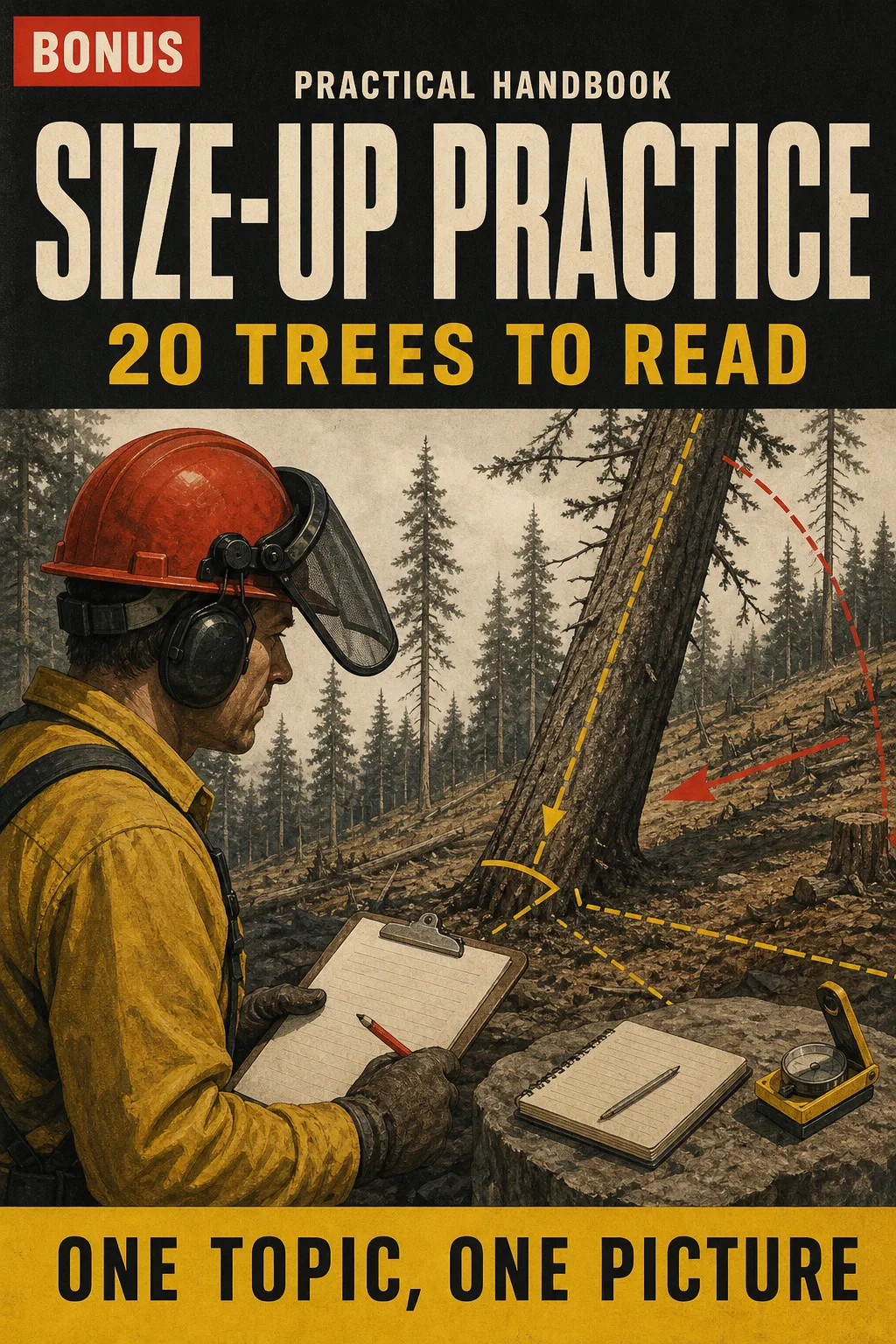
Size-Up Practice: 20 Trees to Read

BONUS 1: «Size-Up Practice: 20 Trees to Read»

Value on its own: US$ 17.90

Twenty drawn trees with lean, crown weight and wind already marked: you decide the fall direction, the escape routes and the hinge, then check your answer on the next page.

Notch & Hinge Quick Cards

BONUS 2: «Notch & Hinge Quick Cards»

Value on its own: US$ 14.90

The notch angles, hinge width and thickness and back-cut height on pocket-size cards you can print and keep in the truck or the saw case.

Tree Felling Illustrated with 2 Free Books

  • Tree Felling Illustrated: 64 illustrated pagesUS$ 63
  • BONUS 1: Size-Up Practice: 20 Trees to ReadUS$ 17.90
  • BONUS 2: Notch & Hinge Quick CardsUS$ 14.90
  • High-resolution PDF to printIncluded
Total value US$ 95.80
YOUR PRICE:
US$ 27
You save US$ 68.80
YES, I WANT TREE FELLING ILLUSTRATED FOR US$ 27

📄 This is a digital PDF book sent to your email: nothing is printed or shipped.

Secure purchaseEncrypted payment30-day guarantee

PDF by email: We email you Tree Felling Illustrated as a PDF, together with the two free books. It's a single payment: no installments, no extra charges.

Who This Book Is For

You cut on your own land

You cut on your own land

Firewood, a dead tree by the fence, a storm blowdown: you get the order and the measurements on one page, and you can print it and keep it in the truck.

You just joined a tree crew

You just joined a tree crew

Instead of guessing from what the foreman yells, you see why the hinge, the notch and the back cut go where they go, in inches.

You run a saw on storm calls

You run a saw on storm calls

As a volunteer firefighter you cut when the road is blocked: the size-up, the drop zone and the escape routes are drawn so you can review them before you head out.

Everything You Get Today

US$ 95.80US$ 27
YES, I WANT TREE FELLING ILLUSTRATED FOR US$ 27

📄 This is a digital PDF book sent to your email: nothing is printed or shipped.

30DAYS
GUARANTEE

30-Day Guarantee

Try Tree Felling Illustrated for 30 days, bonus books included.

We refund everything if the file won't open, if the book isn't what you see here, if you were charged twice or if the email doesn't arrive. Just email us.

You pay once. No subscriptions.

Frequently Asked Questions

Is it for me if I've been cutting trees for years?

Yes, whether you've cut for years or you only cut firewood on your own land. It doesn't teach you to hold a saw: it puts the size-up, the hinge and the back cut on paper, in feet and inches, so you can review them, check them or explain them to someone else. If you've never run a saw, start with hands-on training.

Where does the content come from?

It's checked against OSHA 29 CFR 1910.266 (logging operations), ANSI Z133 and the USDA Forest Service chain saw training material. Measurements are in feet and inches. Check the current version of each rule for your job.

Is this official material?

No. It's an independent illustrated book. It isn't published, approved or endorsed by OSHA, ANSI, the USDA Forest Service or any saw manufacturer.

Does it replace hands-on chainsaw training?

No. It's reference material for reviewing the order and the measurements before you go out. It doesn't replace hands-on training, your saw's manual or your crew's safety rules.

Do I get a certificate? Are the practice trees from a test?

No certificate. It's a reference book, not a training course, and it doesn't count as chainsaw certification or crew training hours. The 20 practice trees were written for this book and don't come from any exam or certification program.

When and how do I get it?

As a PDF by email, sent to the address you enter at checkout. The 2 bonus books come the same way.

Do I have to pay every month?

No. You pay once and the book and the 2 bonus books are yours.

Can I have it on paper?

We don't ship paper copies. You get a PDF made for printing: print the whole book at home or at a print shop, or just the checklist and the quick cards for the truck or the saw case.

How does the refund work?

You have 30 days. We refund everything if the file won't open, if the book isn't what you see on this page, if you were charged twice or if the email doesn't arrive: just email us.

Before You Close This Page

No more rewatching videos that cut it twenty different ways.

The notch, the hinge and the back cut: you see them drawn, and that's it.

You walk up to the tree knowing where every cut goes.

Drawings make studying faster.

The book is right below.

One-time payment: US$ 27 · Guarantee: 30 days · PDF by email

YES, I WANT TREE FELLING ILLUSTRATED FOR US$ 27

📄 This is a digital PDF book sent to your email: nothing is printed or shipped.